

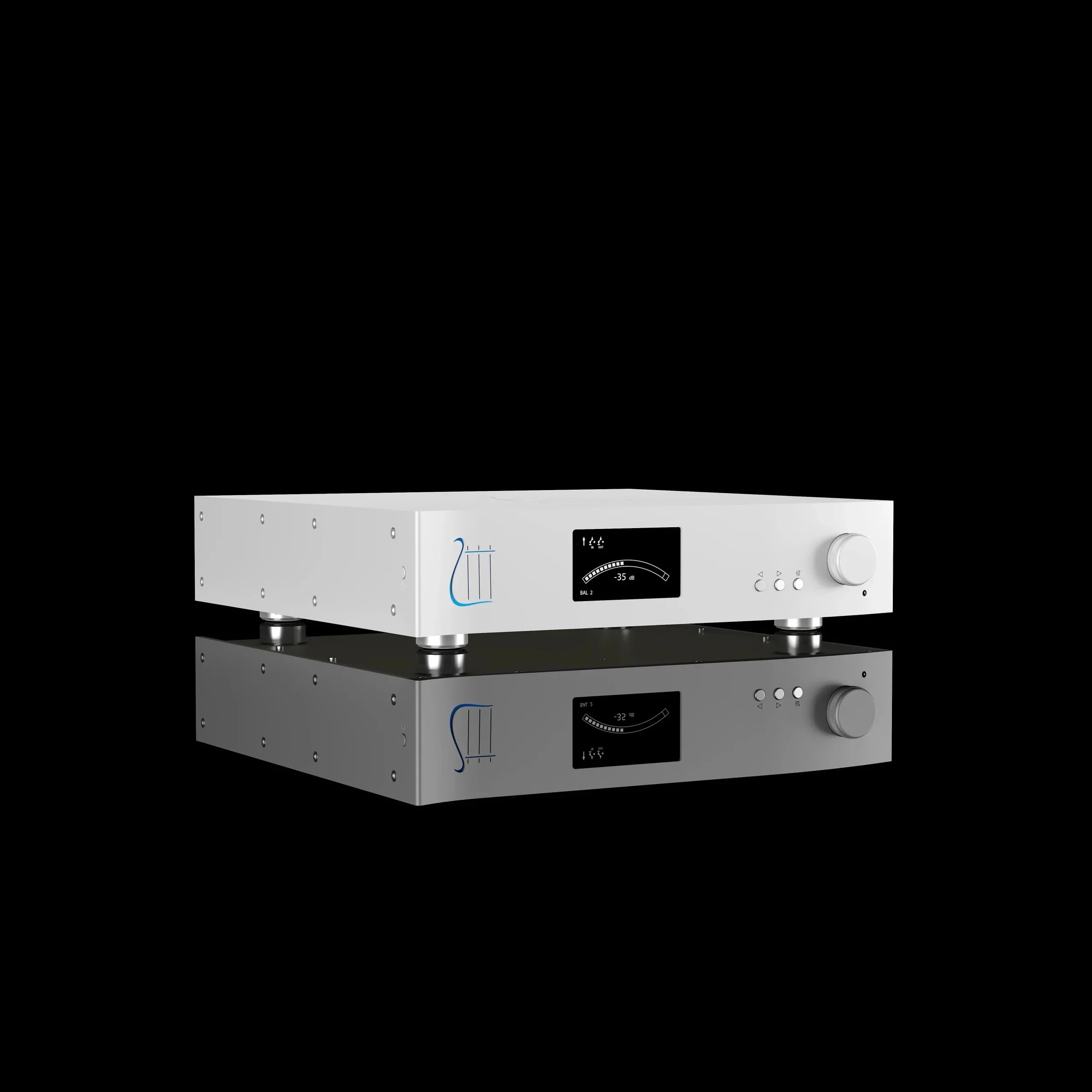
 Image 1 of 3
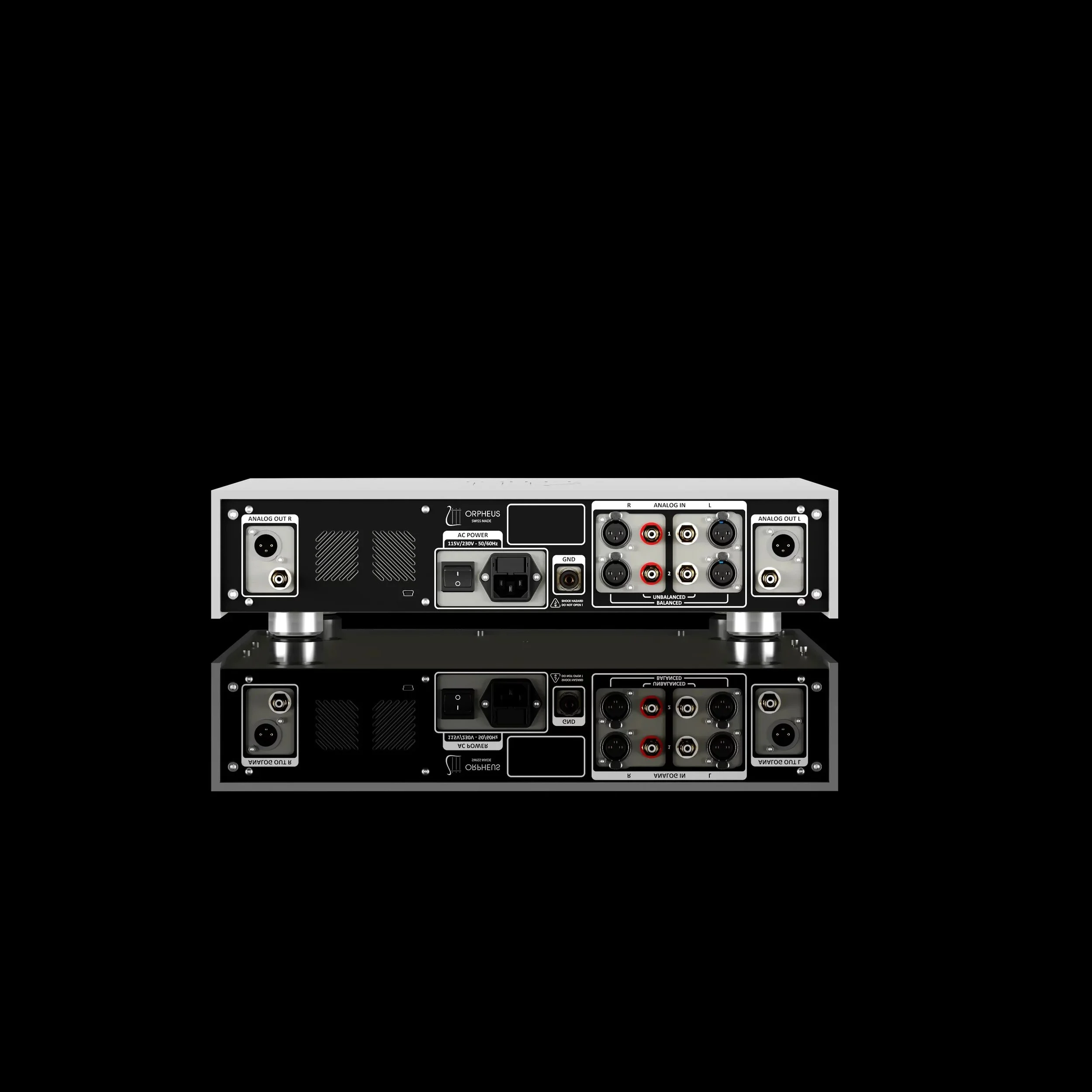 Image 2 of 3
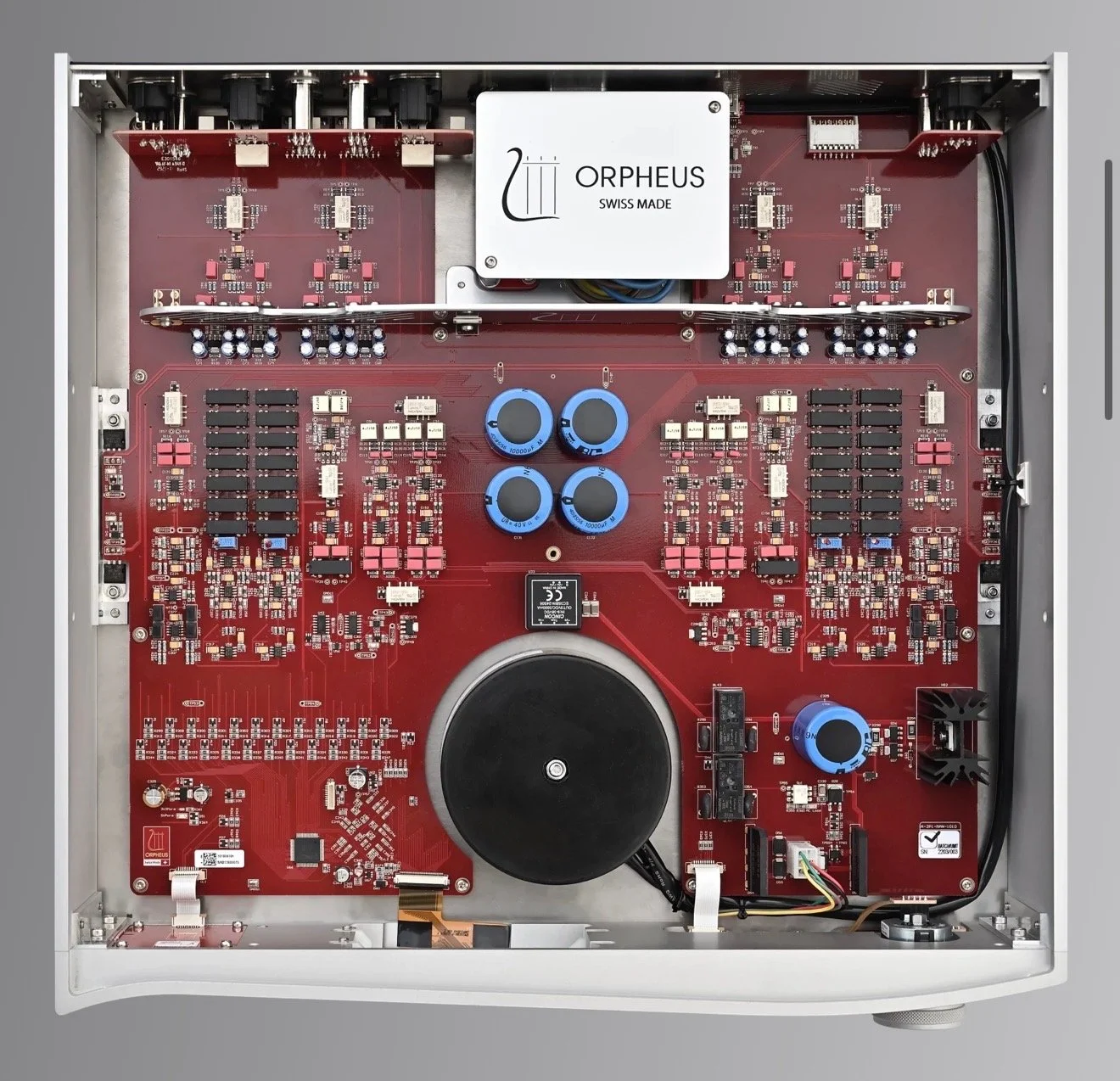 Image 3 of 3
The Orpheus Lab A Two 22D is a high-performance discrete analogue preamplifier designed and manufactured in Switzerland. Drawing upon CRQL technology originally developed for the company’s Heritage Series, it incorporates a genuine dual-mono architecture and a precision resistor-based volume attenuator designed to preserve signal integrity. CRQL, or Constant Resistive Quadrupoles with a Logarithmic distribution architecture, uses carefully selected 0.1% tolerance metal-film resistors to provide accurate attenuation without semiconductor components in series with the signal. Unlike conventional linear R-2R arrangements, its inherently logarithmic architecture enables precise volume adjustment across an exceptionally wide range, with switching synchronised to the audio signal’s zero crossings.
The A Two 22D provides two balanced XLR and two unbalanced RCA inputs, with individual High, Medium and Low gain settings to accommodate source components with differing output levels. A dedicated signal-conditioning stage establishes consistent operating conditions between balanced and unbalanced sources, while a Class A current-buffered output stage provides controlled signal delivery to the partnering power amplifier. Its carefully engineered circuitry achieves a specified distortion figure below 0.0014% at 1kHz and a frequency response extending to 330kHz at -3dB. Combining sophisticated analogue volume control, flexible source integration and low-distortion output circuitry, the A Two 22D provides a technically accomplished foundation for a high-performance separates system.
Key Features
High-performance discrete analogue stereo preamplifier
Designed and manufactured in Switzerland
Part of the Orpheus Lab Absolute Series
Incorporates technology developed for the Heritage Series
Genuine dual-mono circuit architecture
Proprietary CRQL volume-control technology
CRQL stands for Constant Resistive Quadrupoles with a Logarithmic distribution architecture
Precision logarithmic resistor-based attenuator
Attenuator constructed from high-quality metal-film resistors
Resistor tolerance of 0.1%
No semiconductor components in series with the signal within the CRQL attenuator
No feedback loops within the passive attenuator circuit
Logarithmic attenuation architecture rather than a conventional linear R-2R ladder
Volume adjustment in precise 1dB increments
Published volume adjustment range: -120dB to +6dB
Volume switching synchronised with audio signal zero crossings
Switching completed within a maximum of 150 nanoseconds after a zero crossing
Five-stage internal signal architecture
Dedicated source-selection stage
Dedicated input signal-conditioning stage
Individually selectable gain for each input
Three input gain settings: High, Medium and Low
Gain settings of 0dB, +5.85dB and +11.88dB
Class A current-buffered output stage
Four analogue source inputs
Two balanced XLR inputs
Two unbalanced RCA inputs
Balanced XLR and unbalanced RCA output connections
Balanced input impedance: 94kΩ
Unbalanced input impedance: 47kΩ
Maximum balanced input level: 7.2V RMS
Maximum unbalanced input level: 3.6V RMS
Balanced output impedance: 200Ω
Unbalanced output impedance: 100Ω
Selectable signal grounding via rear-panel switch
Grounded and lifted grounding configurations
Wide-bandwidth analogue circuitry
Automatic muting during mains voltage interruption
Maximum power consumption: 50W
Substantial 14.2kg construction