 Image 1 of 3
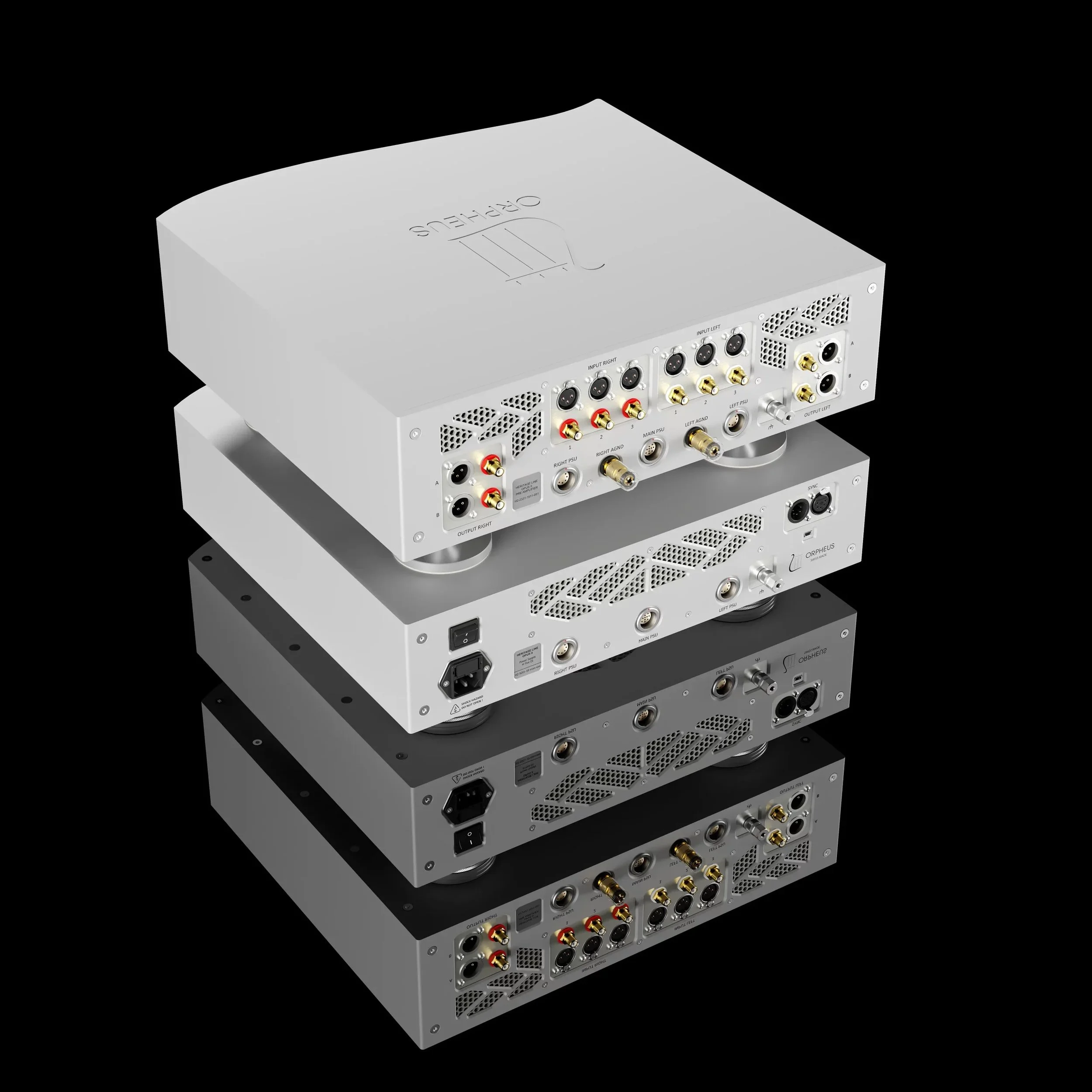 Image 2 of 3
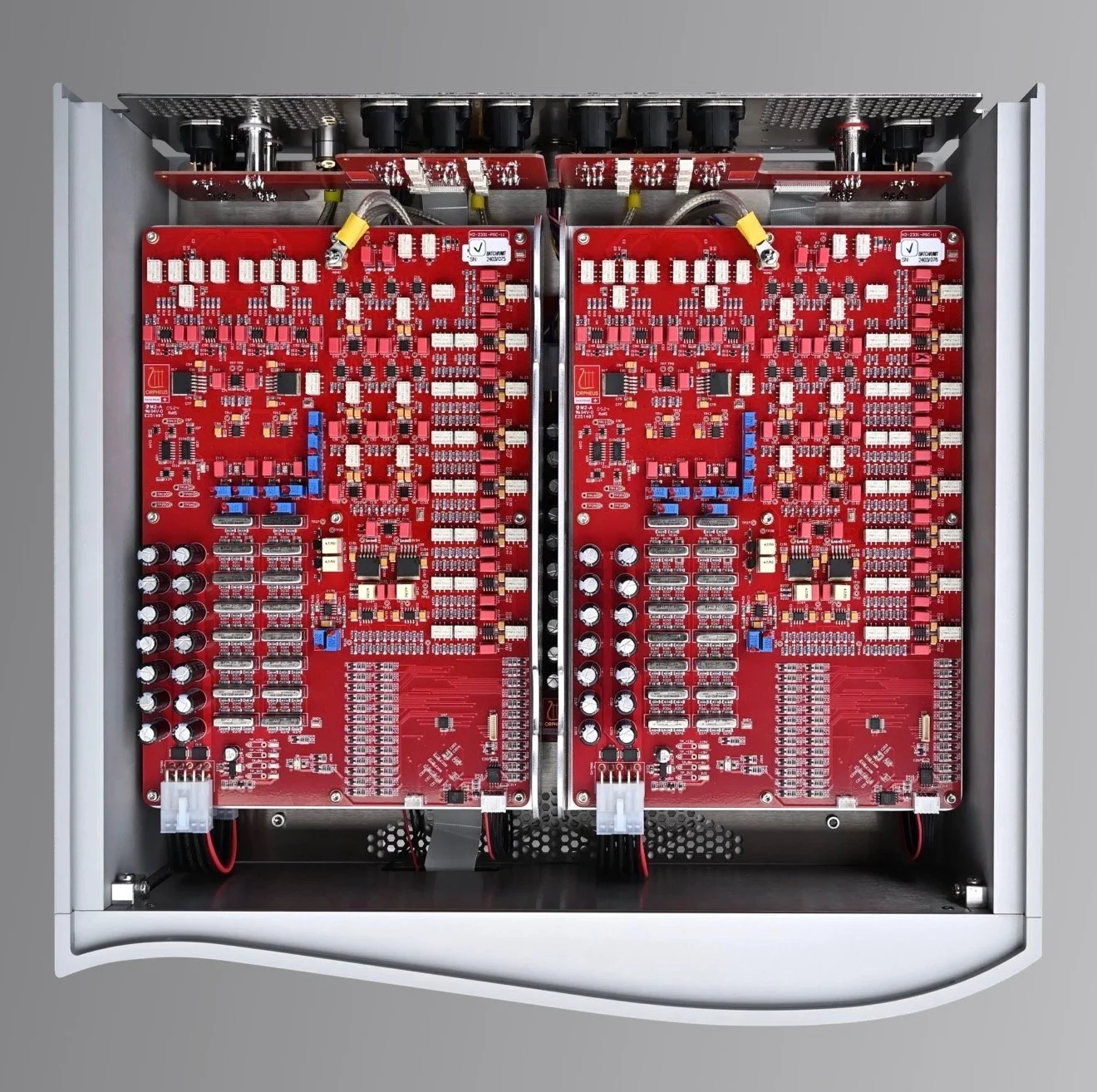 Image 3 of 3
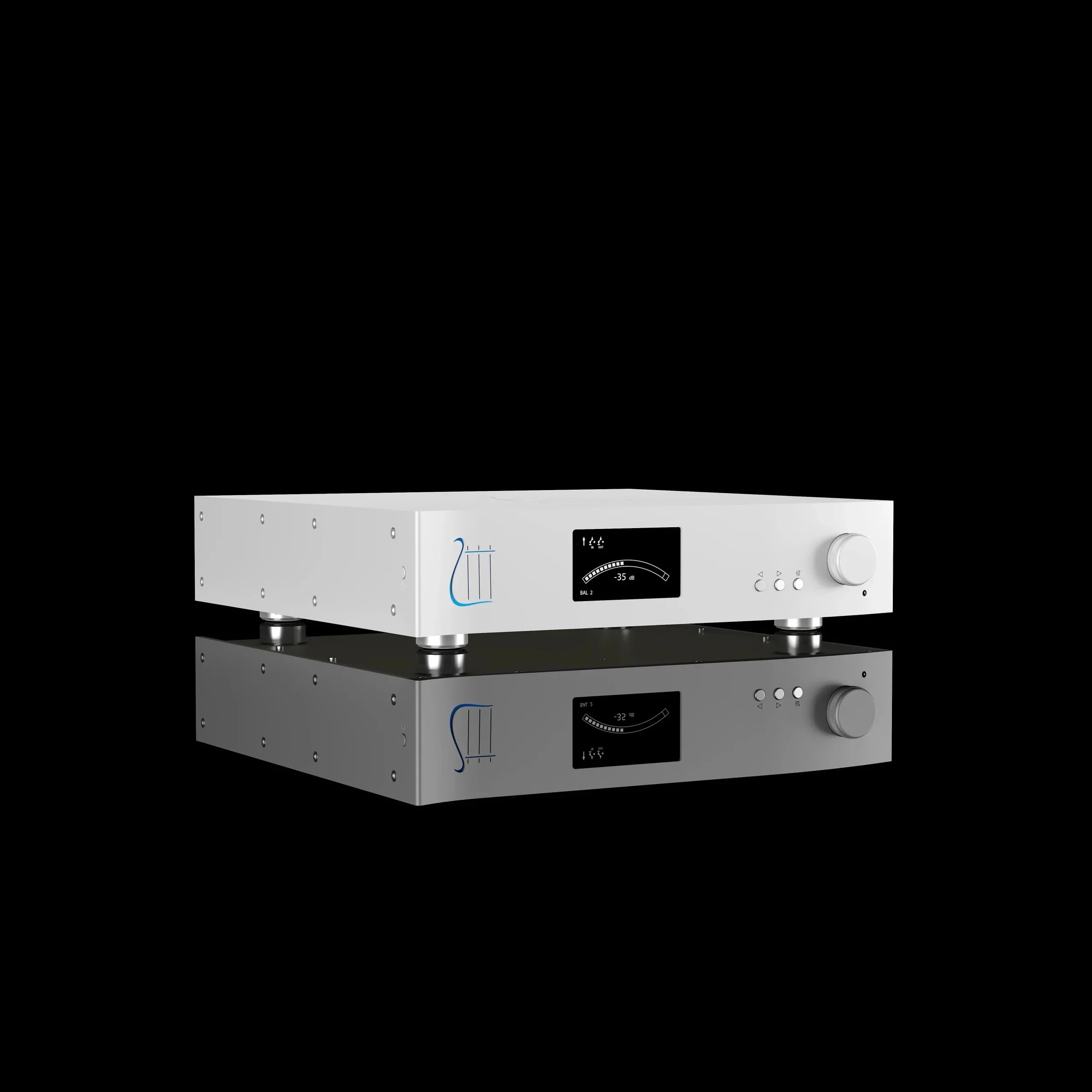
The Orpheus Lab H Two 33BD Opus II is a reference-level analogue preamplifier designed and manufactured in Switzerland. Part of the company’s Heritage Opus II range, it incorporates a genuine dual-mono, fully balanced discrete circuit architecture developed to preserve signal integrity throughout the preamplification process. Its six-stage internal design provides source selection, signal conditioning, independent input gain adjustment, precision volume attenuation, channel balancing and a high-speed output driver. Individual input gain can be adjusted between -12.7dB and +12.7dB in 0.1dB increments, allowing precise matching of source components with different output levels, while independent left and right channel adjustment provides additional flexibility when configuring a carefully optimised system.
At the heart of the H Two 33BD Opus II is Orpheus Lab’s proprietary CRQL volume-control technology, employing a logarithmically distributed network of precision 0.1% tolerance metal-film resistors. This architecture provides attenuation from -127.5dB to +6dB in 0.5dB increments, without placing semiconductor components in series with the audio signal within the attenuator. A discrete output stage with a specified slew rate of 2,000V/µs provides exceptional bandwidth and the ability to drive demanding downstream loads. Two independently configurable outputs support conventional preamplification, bi-amplification and dedicated bypass applications, while a substantial separate power supply supports the precision analogue circuitry. Combining meticulous signal management, sophisticated attenuation and extensive system integration capabilities, the H Two 33BD Opus II provides a highly accomplished control centre for a reference-level audio system.
Key Features
Reference-level fully balanced discrete analogue stereo preamplifier
Designed and manufactured in Switzerland
Part of the Orpheus Lab Heritage Opus II range
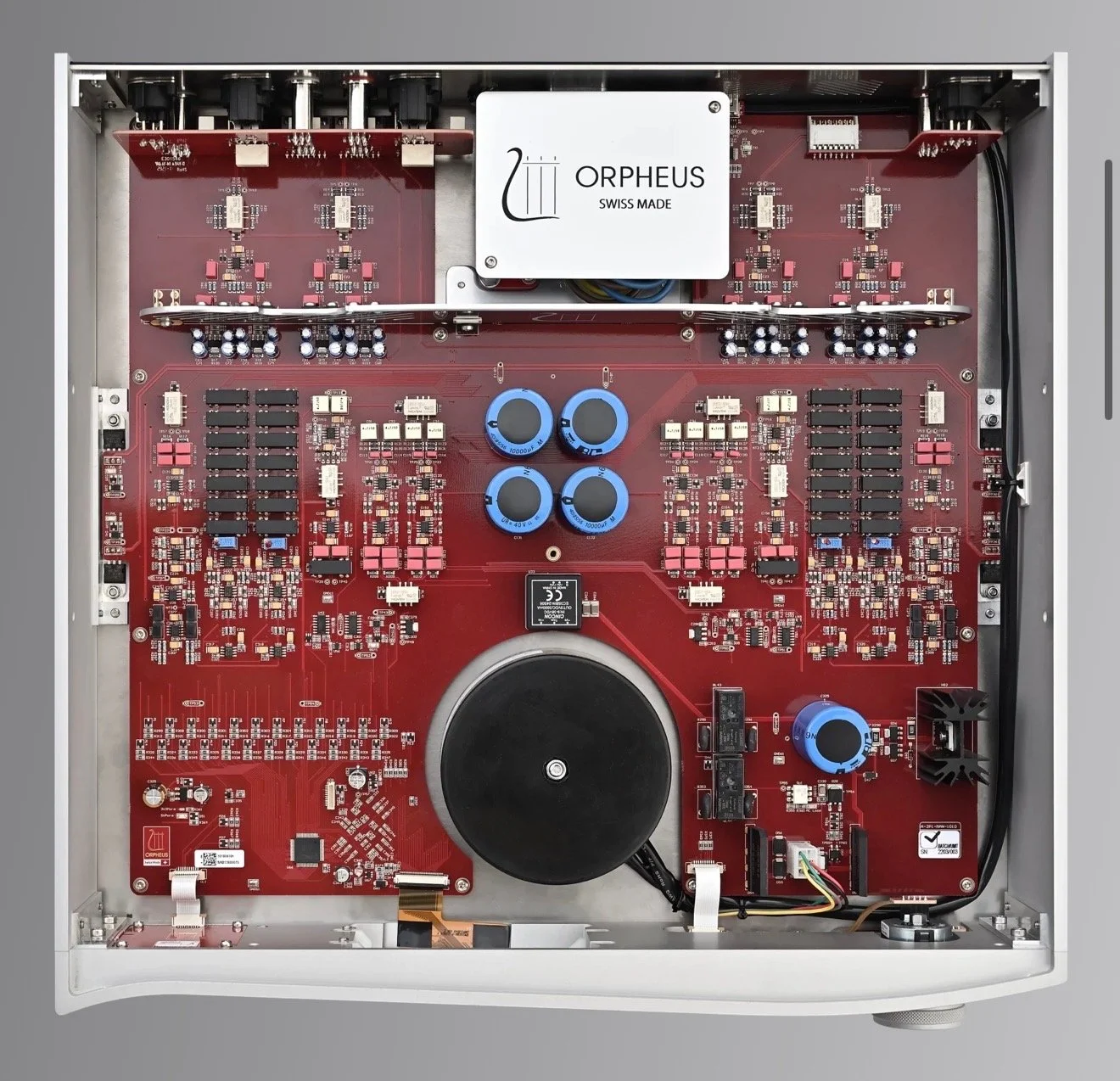
Genuine dual-mono circuit architecture
Fully balanced discrete analogue signal processing
Six-stage internal signal architecture
Dedicated analogue source-selection stage
Signal-conditioning stage for balanced and unbalanced sources
Independent input gain adjustment
Input gain adjustment range: -12.7dB to +12.7dB
Input gain adjustment resolution: 0.1dB
Independent left and right channel gain adjustment for each input
Proprietary CRQL volume-control technology
CRQL stands for Constant Resistive Quadrupoles with a Logarithmic distribution architecture
Precision logarithmic resistor-based attenuator
High-quality metal-film attenuator resistors
Resistor tolerance of 0.1%
No semiconductor components in series with the signal within the CRQL attenuator
Logarithmic attenuation architecture rather than a conventional linear R-2R ladder
Volume adjustment range: -127.5dB to +6dB
Volume adjustment resolution: 0.5dB
Volume switching synchronised with audio signal zero crossings
Switching completed within a maximum of 150 nanoseconds after a zero crossing
Independent channel balance adjustment
Balance correction range: ±12.8dB
Balance adjustment resolution: 0.1dB
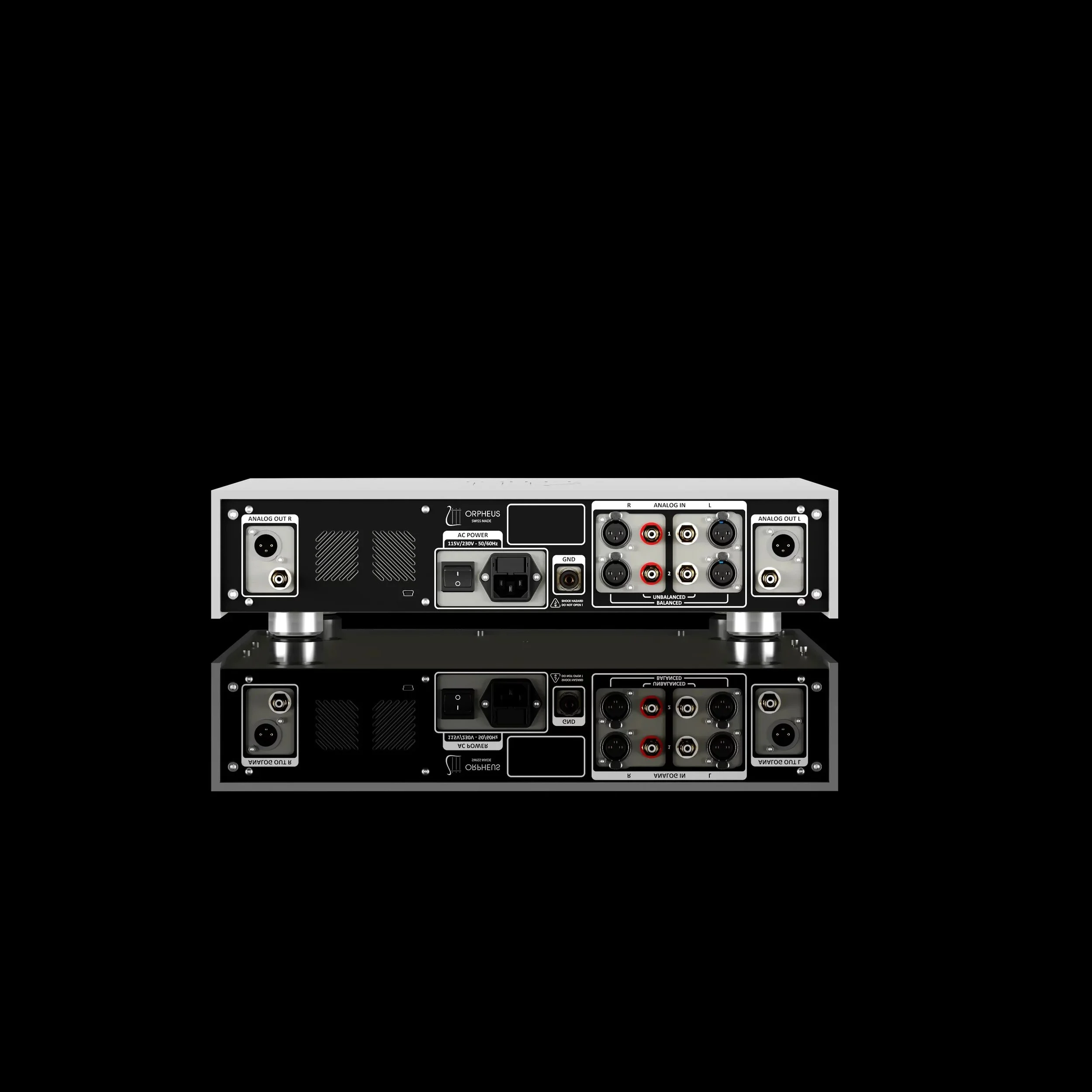
Balanced XLR analogue inputs
Unbalanced RCA analogue inputs
Maximum balanced input level: 18.4V RMS
Maximum unbalanced input level: 9.2V RMS
High-speed discrete analogue output-driver stage
Output-stage slew rate: 2,000V/µs
Output stage designed to drive low-impedance loads
Two independently configurable analogue output groups
Output A selectable between balanced, unbalanced and inactive modes
Output B selectable between balanced, unbalanced and inactive modes
Output B configurable for conventional preamplifier or bypass operation
Preamplifier output mode suitable for bi-amplification systems
Bypass output mode for connection to equipment with its own volume control
Menu-selectable signal grounding
Grounded and lifted signal-ground configurations
Wide-bandwidth analogue circuitry
Published frequency response extending to 1.5MHz within -0.1dB
THD+N below 0.00063% at 1kHz into 600 ohms
Balanced-input dynamic range exceeding 132dB
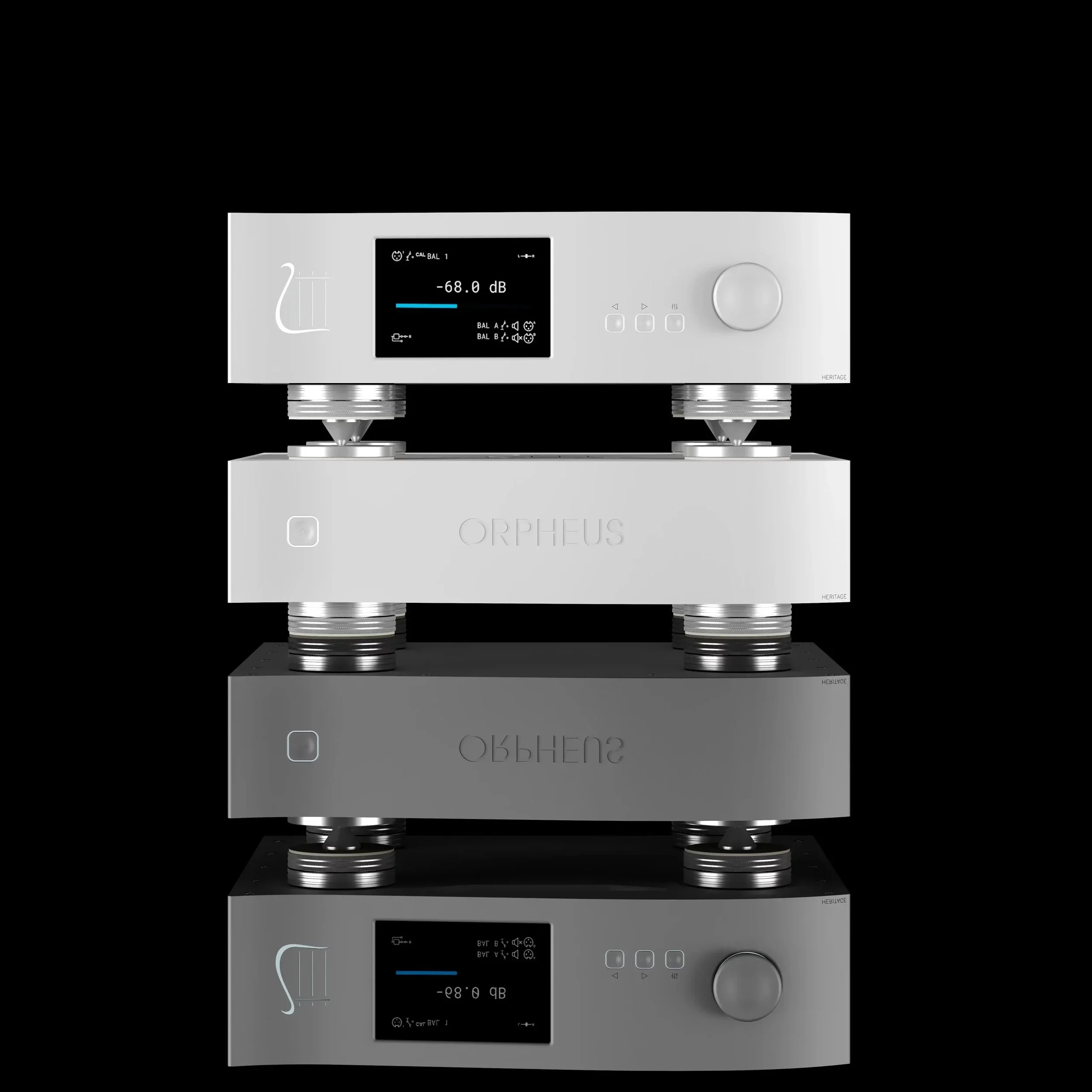
Separate power supply
Combined preamplifier and power supply weight of 50kg
Maximum power consumption: 60W
Standby power consumption below 1W